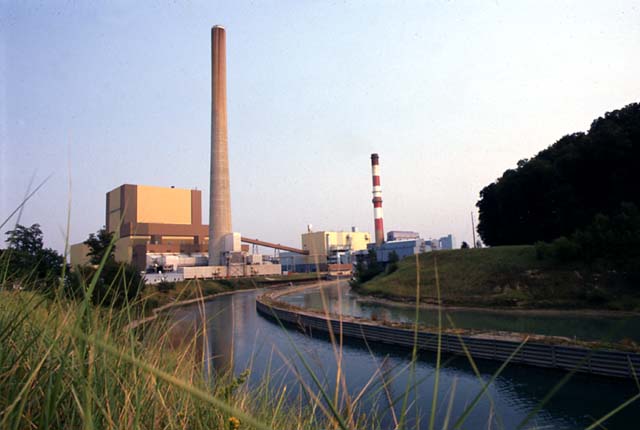
The overall financial picture
Assets:
Campbell property (excluding liabilities and assuming the coal generating plant demolished) $60,000,000
Distribution grid $700,000,000
Total of these assets $760,000,000
Liabilities:
Coal ash remediation $150,000,000
Waste water remediation $70,000,000
Groundwater cleanup $150,000,000
Demolition of Campbell plant $175,000,000
Total of these liabilities $545,000,000
Net value $215,000,000
Even though the electric cooperative does not plan to demolish the Campbell plant, the cost of its demolition is relevant to value for Consumers Energy.
In addition to the acquisition, the acquiring electric cooperative would need to convert unit one or two (maybe both longer term) from coal to gas. The estimated cost to do this is $110,000,000.
So by these estimates and the detailed information below, total initial financing needs of the electric cooperative would be:
$215 million for the purchase of the Campbell and county distribution grid
$110 million to convert unit 1 of the Campbell from coal to gas
$50 million for initial fly ash remediation (although the long-term total would over twice that)
$25 million to treat the waste water for use in a co-located date center
$3 million for initial groundwater remediation
So total initial financing of around $403 million may be needed. Of that, we could seek approximately $103 million from the Office of Energy Dominance Financing and approximately $300 million from the RUS towards purchase of the distribution grid.
Campbell property (excluding liabilities and assuming the coal generating plant demolished)
The fair market value of the approximately 2,000 acres at the J.H. Campbell Generating Complex in West Olive, Michigan, excluding environmental remediation liabilities, is likely in the range of $30 million to $90 million, with a reasonable midpoint estimate of about $50 million to $65 million.
Property Overview
The J.H. Campbell Complex Retirement page states that the Campbell site encompasses 2,000 acres on the eastern shore of Lake Michigan in West Olive. The site includes:
- Several hundred acres of highly valuable waterfront and industrial land
- Deepwater access and an existing channel and jetties
- Rail, transmission, and pipeline infrastructure
- Recreational and public-access areas
- Large inland areas occupied by ash landfills and support facilities
Comparable Land Values
Waterfront Industrial Land
Industrial waterfront land on Lake Michigan with utility infrastructure can command approximately $50,000 to $250,000 per acre, depending on usability and permitting.
Interior Utility/Industrial Land
Less strategic acreage may be worth roughly $10,000 to $40,000 per acre.
Lower-Value Restricted Land
Areas devoted to landfill cells, wetlands, or buffer zones may have lower standalone value.
Estimated Value by Land Type
| Land Type | Approx. Acres | Estimated Value per Acre | Estimated Value |
| Prime waterfront and port-capable land | 200–400 | $100,000–250,000 | $20–100 million |
| General industrial land | 600–900 | $20,000–60,000 | $12–54 million |
| Restricted/open space and buffers | 700–1,200 | $2,000–15,000 | $1–18 million |
These ranges overlap significantly, but they support a broad total value estimate.
Most Likely Market Value
A practical estimate, assuming a sale to a developer or industrial user and ignoring cleanup liabilities, is:
- Conservative: $30–40 million
- Most likely: $50–65 million
- Optimistic: $75–90 million or more
Why the Property Could Be Especially Valuable
The Campbell property has several uncommon advantages:
- Large contiguous acreage on Lake Michigan
- Existing high-voltage interconnection to the regional grid
- Industrial zoning and decades of utility use
- Water access and existing marine structures
- Potential redevelopment for data centers, battery storage, gas generation, hydrogen, manufacturing, or logistics
These attributes can make portions of the site more valuable than ordinary industrial land.
Important Caveat
In real-world transactions, environmental obligations can dramatically reduce sale price. Because your question excludes remediation costs, this estimate reflects the value of the land and infrastructure location alone rather than the likely net proceeds from an actual sale.
Bottom Line
Excluding environmental cleanup costs, the 2,000-acre Campbell property likely has a fair market value of approximately:
$50 million to $65 million, with a broader plausible range of $30 million to $90 million.
That corresponds to an average value of roughly $25,000 to $32,500 per acre, although the highest-value waterfront sections are worth substantially more than interior acreage.
Distribution grid
There is no publicly disclosed standalone valuation for Consumers Energy’s distribution grid specifically within Ottawa County, Michigan. But using utility infrastructure valuation methods and publicly available system data, a reasonable estimate can be developed.
Consumers Energy’s electric distribution system across Michigan includes roughly:
- 92,000+ miles of distribution lines,
- more than 1,000 substations,
- and service to about 1.9 million electric customers.
Ottawa County reportedly has about 90,000 Consumers Energy electric customers.
Utility distribution systems in the U.S. are commonly valued using:
- regulated rate base,
- replacement cost,
- or transaction multiples per customer.
Typical electric distribution infrastructure replacement values often range around:
- $4,000–$10,000 per customer for mature suburban systems,
- sometimes higher where undergrounding, redundancy, and rapid-growth investments are occurring.
Applying that range to Ottawa County:
| Method | Estimated Value |
| Low estimate (~$4k/customer) | ≈ $360 million |
| Mid-range (~$7k/customer) | ≈ $630 million |
| High estimate (~$10k/customer) | ≈ $900 million |
A rough midpoint estimate for Consumers Energy’s Ottawa County electric distribution grid is therefore probably in the range of:
≈ $600–800 million
That would include:
- substations,
- poles and wires,
- underground distribution,
- transformers,
- smart meters,
- distribution rights-of-way,
- and related local infrastructure.
It would not include:
- major generation plants,
- regional transmission lines,
- corporate assets,
- or statewide gas infrastructure.
The number could be materially higher if you include natural gas distribution assets in Ottawa County as well. Consumers has been investing heavily in grid modernization statewide, including Ottawa County reliability and reconductoring projects.
Coal ash remediation
Consumers Energy’s total cost to remediate coal ash at the J.H. Campbell Generating Complex is likely to be substantially lower than originally expected because the company has entered into an agreement with Ashcor USA to excavate and beneficially reuse the ash rather than simply cap and maintain it indefinitely.
Publicly Disclosed Company Estimate
In CMS Energy’s 2025 Annual Report filed with the SEC, the company stated that its estimated capital and ash-removal expenditures to comply with coal ash regulations are $241 million from 2026 through 2030. This figure covers all Consumers Energy coal ash facilities, not just Campbell.
Campbell’s Likely Share
The Campbell site contains one of Consumers Energy’s largest coal ash inventories, representing roughly 60 years of deposits. Because it is one of the company’s biggest ash sites, a reasonable assumption is that Campbell could account for 40% to 70% of the total program cost.
That implies a Campbell-related expenditure in the approximate range of:
- Low estimate: $100 million
- Mid-range estimate: $140–170 million
- High estimate: $200 million+
Why Costs May Be Lower Than Traditional Closure
Consumers and Ashcor announced in January 2025 that Ashcor will remove and process “millions of tons” of stored ash into a cement replacement product over about 20 years. This arrangement could significantly reduce Consumers Energy’s net costs because Ashcor bears some processing and marketing costs and the ash becomes a saleable material instead of a long-term liability.
Additional Costs That Will Still Remain
Even with ash reuse, Consumers Energy will likely continue to incur costs for:
- Groundwater monitoring and corrective action
- Landfill closure and capping
- Wastewater treatment
- Regulatory reporting
- Long-term site maintenance
These obligations can persist for decades after ash removal begins.
Possible Cost Range to Customers
If Campbell remediation costs total about $150 million and are spread across approximately 1.9 million electric customers, the nominal cost would equal roughly:
- About $79 per customer total, before financing and any cost sharing
Actual bill impacts would be spread over many years and depend on regulatory approval by the Michigan Public Service Commission.
Bottom Line
A realistic estimate is that Consumers Energy will spend approximately:
- $100 million to $200 million to remediate the coal ash at Campbell
- Most likely around $150 million, although the net cost could be lower if Ashcor’s recycling project offsets a significant portion of the expense
The partnership with Ashcor means Campbell’s coal ash cleanup may cost considerably less than a conventional “dig it up and landfill it” approach, while also reducing long-term environmental liabilities.
Waste water
Consumers Energy has not publicly released a detailed construction budget for the two proposed deep injection wells at the Consumers Energy J.H. Campbell facility, so any estimate must be based on industry norms and publicly available permit information.
Estimated Capital Cost
A reasonable estimate for two Class I non-hazardous underground injection wells is:
| Cost Component | Estimated Cost |
| Drilling two wells to 4,500–6,000 feet | $12–20 million |
| Steel casing and cementing | $4–8 million |
| Surface facilities (pumps, pipelines, tanks, controls) | $5–10 million |
| Monitoring and safety systems | $2–5 million |
| Engineering, permitting, legal, and contingency | $5–10 million |
| Total Estimated Capital Cost | $28–53 million |
Most Likely Range
A practical estimate is $35–45 million total.
This is consistent with typical U.S. Class I injection well projects and the Campbell permit application, which proposes two wells capable of injecting up to 300 gallons per minute for at least 50 years.
Annual Operating Costs
After construction, Consumers Energy would likely incur:
| Expense | Estimated Annual Cost |
| Electricity for high-pressure pumps | $300,000–800,000 |
| Labor and oversight | $500,000–1.5 million |
| Testing, reporting, and compliance | $200,000–600,000 |
| Maintenance and periodic integrity testing | $500,000–1.5 million |
| Total Annual Operating Cost | $1.5–4.4 million per year |
Lifetime Cost Over 50 Years
Using a mid-range estimate:
- Initial capital cost: $40 million
- Average annual operations: $2.5 million
- 50 years of operation: $125 million
- Total nominal lifetime cost: ~$165 million
Without adjusting for inflation or financing, the total could range from $100–250 million.
Impact on Customers
Consumers Energy serves roughly 1.9 million electric customers. If the company were allowed to recover a $40 million capital investment entirely through electric rates:
- Cost per customer: about $21 one time
If spread over 20 years with financing and operating costs, the impact would likely be only a few cents to a few tenths of a dollar per month per customer, depending on regulatory treatment.
Why Consumers Is Considering This Option
The Campbell facility currently sends treated wastewater to Lake Michigan. Once the plant closes, wastewater from coal ash landfills and groundwater remediation will still need long-term management. Consumers says it already operates similar injection wells at its Zeeland generating site, which have operated since 2002 without permit violations.
Bottom Line
Consumers Energy will likely need to spend approximately:
- $35–45 million upfront
- $1.5–4.4 million annually to operate
- $150–200 million over the expected 50-year life
For a utility of Consumers Energy’s size, this is a significant but manageable infrastructure investment, and if approved by the Michigan Public Service Commission, most of the cost would likely be recovered from ratepayers over many years.
On a present value cost basis, we estimate this at $70,000,000.
Groundwater cleanup
There does not appear to be a publicly released total estimate specifically for the full groundwater cleanup liability at the J.H. Campbell Generating Complex site. However, several public filings provide pieces of the likely cost picture.
The clearest documented number comes from Michigan EGLE financial assurance records for the J.H. Campbell landfill and coal ash disposal areas. Those records list:
- Corrective action estimate: $845,000
- Closure/post-closure estimate: $1.55 million
- Total listed environmental assurance amount: about $2.39 million
That figure is likely not the full long-term remediation cost for all groundwater contamination concerns at the broader Campbell complex. It appears to reflect only the formally required financial assurance tied to specific landfill and coal combustion residual (CCR) corrective-action obligations under Michigan solid-waste regulations.
More recent filings and announcements suggest the ultimate remediation scope could be substantially larger:
- Consumers Energy has acknowledged ongoing groundwater monitoring and corrective-action programs at J.H. Campbell coal ash ponds and landfills.
- In 2025, Consumers and Ashcor announced a project to remove and beneficially reuse “millions of tons” of stored coal ash from the site.
- EGLE documents from 2026 reference proposed deep injection wells for disposal of “extracted remedial project groundwater” and landfill leachate from the Campbell site.
Based on comparable coal ash remediation projects nationally, full remediation liabilities for a large retired coal plant can range from:
- tens of millions for limited monitoring/cap-and-close approaches,
- to hundreds of millions of dollars if excavation, ash removal, groundwater extraction/treatment, and long-term monitoring are required.
For context:
- Duke Energy’s North Carolina coal ash settlements exceeded several billion dollars systemwide.
- Individual large coal ash pond excavations elsewhere in the Midwest and Southeast have often cost $100–500+ million per site.
Given the scale of Campbell (roughly 2,000 acres and decades of coal ash accumulation), a realistic long-term total environmental remediation exposure could plausibly fall somewhere in the $50–300+ million range, depending on:
- how much ash is excavated versus capped,
- groundwater contamination severity,
- regulatory requirements,
- and how much material can be commercially reused by Ashcor.
But importantly, Consumers Energy has not publicly published a definitive total groundwater cleanup liability estimate for the site.
Demolition of Campbell plant
Consumers Energy has not publicly disclosed a stand-alone demolition budget for the J.H. Campbell Generating Complex, but based on the size of the facility and comparable U.S. coal plant retirements, a reasonable estimate is that demolition and site decommissioning will cost approximately $100 million to $250 million, with a likely midpoint around $150 million to $200 million.
Why the Cost Is So High
The Campbell complex is a large, three-unit coal-fired power plant:
- Nearly 1,500 megawatts of generating capacity
- More than 2,000 acres of property
- Three boilers, smokestacks, conveyors, cooling systems, and extensive electrical infrastructure
- Decades of asbestos, lead paint, and other regulated materials requiring specialized handling
Consumers Energy has stated that the plant will be retired and that demolition will begin in 2026 as part of a long-term site restoration process.
Estimated Demolition Cost Breakdown
| Component | Estimated Cost |
| Hazardous materials abatement (asbestos, lead, PCBs) | $20–50 million |
| Structural demolition of boilers, stacks, and buildings | $40–100 million |
| Scrap handling and recycling | ($10–30 million offset) |
| Site grading and restoration | $10–30 million |
| Engineering, permitting, and contingency | $20–50 million |
| Estimated Net Total | $100–250 million |
Factors That Could Reduce Costs
Several factors may lower Consumers Energy’s net cost:
- Scrap steel recovery from boilers, piping, and structural steel.
- Reuse of portions of the site for future industrial or energy projects.
- Regulatory accounting, which allows many retirement-related costs to be recovered over time from customers. The Michigan Public Service Commission has authorized deferred treatment for decommissioning and ash disposal costs associated with Campbell.
Comparison to Similar Coal Plant Demolitions
Large U.S. coal plant demolition projects commonly fall within this range:
- Small to mid-size plants: $20–80 million
- Large multi-unit plants (1,000+ MW): $100–300 million
Because Campbell is a large, older, three-unit facility, it is likely toward the upper end of typical decommissioning costs.
Total Retirement-Related Spending
Demolition is only one portion of the broader retirement program. In addition, Consumers Energy is expected to spend substantial amounts on:
- Coal ash remediation
- Groundwater cleanup
- Wastewater treatment and disposal
- Long-term environmental monitoring
The company has also implemented retention programs to keep employees through retirement, with Campbell retention costs estimated at about $50 million through 2025.
Bottom Line
A realistic estimate for demolition of the J.H. Campbell plant is:
- Low estimate: $100 million
- Most likely range: $150–200 million
- High estimate: $250 million or more
This makes demolition one of the largest single components of the plant’s retirement, but it is still likely comparable to or somewhat larger than the cost of coal ash remediation at the site.
Conversion of Campbell Unit 1 from Coal to Gas Plant
Converting Unit 1 of the J. H. Campbell Generating Plant from coal to natural gas while maintaining roughly the same electric output (about 261–265 MW nameplate, with an effective maximum output closer to 220 MW) would likely cost approximately:
Estimated Conversion Cost: $75 million to $150 million
A reasonable planning estimate is about $110 million.
Why the Cost Is in This Range
Unit 1 is a conventional steam unit that began operating in 1962. A coal-to-gas conversion would generally keep the existing steam turbine and generator while replacing or modifying the boiler and fuel-handling systems.
Major cost components include:
| Component | Approximate Cost |
|---|---|
| Boiler burner modifications | $20–40 million |
| Natural gas pipeline interconnection and metering | $15–35 million |
| Removal/retirement of coal handling systems | $5–10 million |
| Control system upgrades | $5–15 million |
| Emissions system modifications | $5–15 million |
| Engineering, permitting, contingency | $20–35 million |
| Total | $75–150 million |
Cost per Kilowatt
For older coal units, conversions commonly cost:
- $300 to $600 per kW
For a 265 MW unit:
265,000×(300 to 600)=79.5 to 159 million dollars
This aligns well with the estimated range.
Comparison with Similar U.S. Projects
Recent coal-to-gas conversions in the United States have generally cost:
- Smaller units: $50–150 million
- Large, more complex units: $200+ million
Because Campbell Unit 1 is relatively modest in size but quite old, it would likely fall toward the middle of this range.
Additional Costs That May Be Required
Because the unit is more than 60 years old, further investment could be needed to address:
- Boiler tube replacement
- Steam turbine refurbishment
- Generator rewinds
- Cooling-water and balance-of-plant upgrades
These could add $20–80 million if the unit is expected to operate another 15–25 years.
Total Investment Including Life Extension
If Consumers Energy wanted a long-term reliable gas-fired unit, the total capital requirement could be:
- $100 million to $230 million
Economic Perspective
A new simple-cycle gas turbine of similar capacity might cost:
- $250–400 million
A new combined-cycle plant would cost more but operate much more efficiently.
Because Unit 1 is old and less efficient, utilities often prefer building new gas generation rather than converting very old coal units.
Likely Capacity After Conversion
The unit would likely retain roughly the same maximum output:
- Nameplate: 261–265 MW
- Practical dependable capacity: 220–250 MW
This is consistent with recent filings describing Unit 1’s effective maximum capacity.
Bottom-Line Estimate
For budgeting purposes, a realistic approximation is:
About $110 million (with a likely range of $75–150 million)
If major refurbishment is required to extend the unit’s life, total investment could approach $200 million or more.