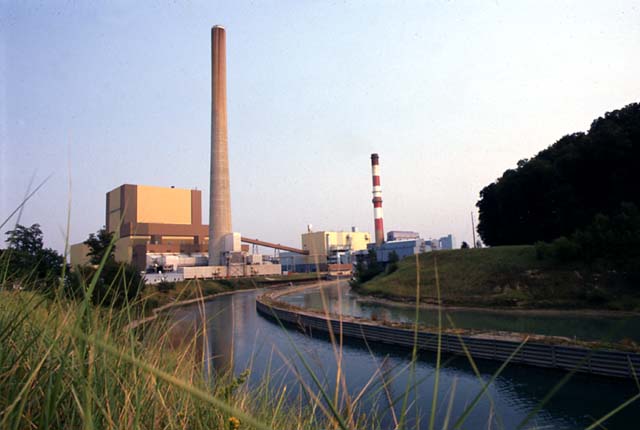
Pollution from Canadian wildfires differs fundamentally from the emissions of the J.H. Campbell coal plant in volume, toxicity, and duration. [1, 2, 3]
- Scale & Volume: Canadian wildfires burn millions of acres, emitting massive amounts of carbon and particulate matter over a few months. A single major season can release over 600 million metric tons of carbon, dwarfing the annual emissions of specific industrial plants. [1, 2]
- Toxicity: Wildfire smoke is a complex mix of fine particles (\(PM_{2.5}\)), toxic gases, and heavy metals. Recent studies indicate that wildfire \(PM_{2.5}\) can be significantly more toxic and reactive than ambient pollution from fossil fuels, triggering severe respiratory and cardiovascular issues. [1, 2]
- Regulatory Controls vs. Unfiltered Plumes: The Campbell plant is a fixed source heavily regulated by the EPA, capturing certain pollutants (like sulfur dioxide and nitrogen oxides) through smokestack scrubbers. Wildfire emissions, conversely, are entirely unfiltered, dumping hazardous smoke directly into the regional atmosphere. [1, 2, 3, 4, 5]
- Concentration Events: While the J.H. Campbell plant provides steady, localized baseline pollution that can be progressively eliminated, Canadian wildfire events lead to sudden, hazardous spikes—frequently elevating regional Air Quality Index (AQI) readings to “Code Purple” or “Code Red” levels across Michigan and the Midwest. [1, 2, 3, 4, 5]
So the health damage from these wildfires far exceeds any from the Campbell, and they are preventable by allowing roads into the forests and judicious industrial scale logging, but Net Zero “environmentalists” oppose such common sense measures, while lying about the role of CO2 in wildfires. CO2 actually has minimal impact on global warming. Net Zero advocates falsely blame CO2 and its emission from fossil fuel plants like the Campbell for the wildfires, when evidence indicates demolition of all of the fossil fuel plants in the USA would have no discernible impact on North American forest wildfires.