“MISO Reliability Outlook Reaches High Risk in Latest NERC Assessment…While ERCOT and PJM are expected to enter the “High Risk” category by 2029, MISO is projected to reach “High Risk” by 2028.”
MISO Reliability Outlook Reaches High Risk in Latest NERC Assessment
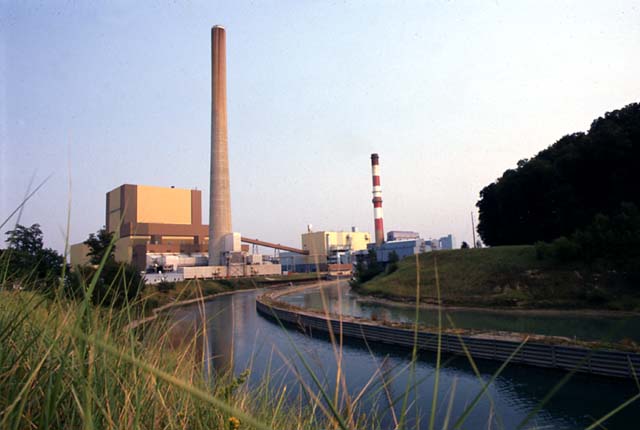
A recent court ruling threatens to overturn the Trump Administration’s executive order to keep the Campbell operating: Federal court rules against Trump DOE order for Michigan’s Campbell coal plant – mlive.com .
The planned replacements for the Campbell in Michigan are much less reliable than the Campbell; solar is simply not a reliable replacement. Even a restarted Palisades nuclear plant is not as reliable as the Campbell, as evidenced by repeated delays to its opening by discovered mechanical problems, and its sketchy history before its shut down.
Some respond that projects to improve long-distance high-voltage transmission will resolve the risk, but such is inherently more exposed:
- Geographic exposure: The U.S. grid has over 200,000 miles of high-voltage transmission lines and hundreds of large transformer substations, much of it running through remote or lightly monitored terrain, which is structurally difficult to physically secure end-to-end compared to a contained generation site.
- Concentrated critical points: High-voltage transformers make up less than 3% of all U.S. transformers but carry 60–70% of the nation’s electricity, making them high-value, low-redundancy targets. They’re also the hardest component to replace — custom-built, long lead times, and few domestic manufacturers — so damage there causes outsized, long-duration disruption rather than something quickly repaired.
- Vulnerability to distributed/coordinated disruption: Government and industry analysis has found that while the grid is generally resilient and designed for rapid restoration after routine failures, it is vulnerable to intelligent, multi-site attacks by capable actors intent on causing maximum damage across a wide geographic area — a risk profile that’s specific to networks spanning large distances with many exposed points, not something a compact, localized system faces in the same way.
- Weather/natural-hazard exposure scales with distance: Longer transmission corridors cross more distinct weather zones and terrain types (ice storms, high wind, wildfire corridors, seismic zones), so a single long line has more cumulative exposure to some disruptive natural event along its length than a short, localized connection does.