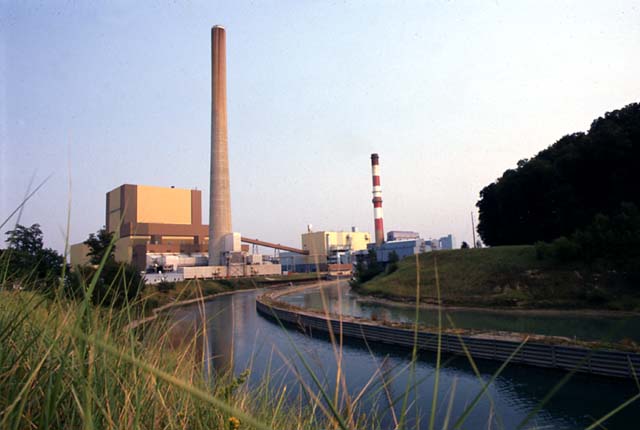
“It looks like Consumers Energy is on the fast track for approval of permits to install two deep injection wells in Port Sheldon. The wells will be used for long term storage of ‘’non-hazardous wastewater generated from the JH Campbell” plant. How does that announcement land amongst those who adhere to Joe McCarter’s well-articulated vision for the JH Campbell power plant? Should Ottawa County have any concerns about Consumer Energy’s plans to install two deep-injection wells for “non-hazardous wastewater” disposal in Port Sheldon? No public hearings have been scheduled, and none will be unless the EPA determines that there is sufficient public interest. They will make that decision based upon the level of concern expressed during written public comment. The EPA is taking written public comment until May 4th.”
Per ChatGPT:
“What the wastewater actually looks like there from site documents and broader coal-ash data:
- The wastewater is primarily coal ash landfill leachate + contaminated groundwater
- It contains dissolved salts and metals like:
- boron, chloride, calcium, iron
- plus typical coal-ash contaminants like arsenic, selenium, mercury
- It is:
- chemically complex
- often high in total dissolved solids (TDS)
- Volumes are large and long-term due to:
- decades of ash disposal (millions of cubic yards)
- continuing leachate generation even after plant closure
👉 That combination—high volume + dissolved contaminants—is what drives the feasibility of each option.”
A significant factor here is that Consumers Energy chose the easy, inexpensive path for decades (“decades of ash disposal”), rather than the most environmentally responsible path of selling the ash for use in commercial and industrial processes, so that it would not accumulate on site. Consumers Energy executives, nor Lansing and Washington DC bureaucrats, have to live with environmental contamination in Ottawa County, but the citizens of Ottawa County do. Ash disposal is a major environmental problem, and the Campbell plant is #97 among coal plants in the USA for this set of problems. Consumers Energy is legally responsible to clean up the mess they made while managing the Campbell plant.
Here is what ChatGPT further says:
“A More Nuanced Take (What a “best possible” plan would look like)
If you were designing an optimized approach (not just cheapest), it would likely be:
- Deep injection wells → handle bulk volume
- Targeted treatment systems → reduce toxicity before injection
- Ash reuse (Ashcor project) → reduce future leachate generation
👉 In other words: a hybrid system, not a single solution.”
So ChatGPT suggests there is likely a more optimized approach than what Consumers Energy wants to decide for us.
Other sources like the ProPublica article entitled “Injection Wells: The Poison Beneath Us” paint a far more cautionary warning about injection wells: “…scientists and environmental officials have assumed that
deep layers of rock beneath the earth would safely entomb the waste for millennia. There are growing signs they were mistaken…” It should be noted that environmental groups like EarthJustice strongly oppose the widespread use of deep injection wells for wastewater disposal, viewing them as a dangerous and unsustainable “false solution”. The organization argues that these wells threaten to contaminate drinking water, induce earthquakes, and have other risks. EarthJustice argues that rather than relying on well injection, industry should focus on treating, reducing, and recycling wastewater. While disagreeing with EarthJustice on many things, including whether coal should be used for electric generation, I tend to agree with them on this.
As a matter of general policy, we should seek to treat and reuse wastes, including such wastewater, rather than burying it and hoping for the best. Specifically, I would suggest investigation that a significant portion of that bulk wastewater be treated for use in both a co-located data center’s cooling system (the exploratory committee is pursuing a co-located data center), plus perhaps other ones, and for other commercial purposes. Data centers in Arizona and Virginia use reclaimed municipal wastewater, so there is precedence for using wastewater in data centers, but it should be noted that the Campbell wastewater would need more pre-treatment than these municipal wastewater systems.
Consumers Energy’s plan is within standard industry protocol, but the risks of their method can be reduced the more we can decrease the volume of wastewater injected deep underground. I hope to get more insight into this issue by discussing it with our Water Resources Commissioner Joe Bush, who also sits on the exploratory committee for a locally controlled electric cooperative. We appreciate having him on it, especially given all of the water issues associated with our electric grid.
Some will look at this issue as evidence the Campbell plant should be demolished, and we should have no coal plant. But that response ignores that every energy path contains environmental challenges. The lithium ion battery plant that Consumers Energy has mentioned for the Campbell site carries many environmental challenges itself, along with the basic fact that solar/wind/battery do not provide reliable baseload electric in Michigan. Coal’s challenges can be economically mitigated, unlike various alternative energy sources. The combination of coal and gas remains as the most practical and environmentally responsible route for West Michigan’s electric.
The wise path is to obtain local control of our electric grid, and to spend some extra money to have environmentally responsible electric, which also meets criteria of reliability and affordability. Unfortunately, the current arrangement with the Consumers Energy monopoly serves the financial interests of its executives and investors, along with the misguided agenda of Net Zero advocates (who have an unreasonable fear of carbon dioxide at current levels).