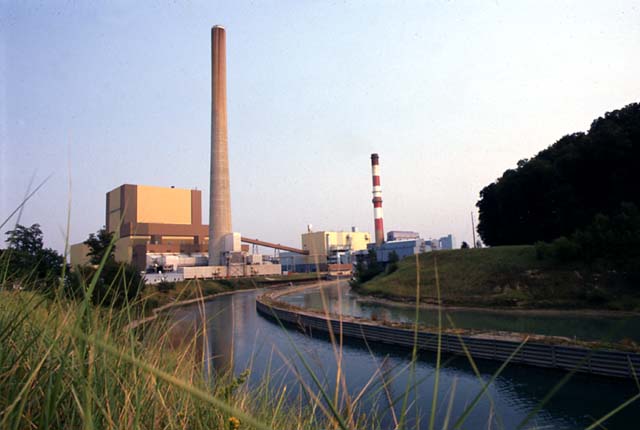
In the first round of “Save The Campbell” resolutions seven township boards and the County Board passed a resolution to save the Campbell from Consumers Energy’s planned 2025 closure and demolition of the Campbell plant as part of the Net Zero agenda. Local legislators then joined in. The Trump Administration acceded to the request, intervened, and stopped the Campbell’s 2025 closure and demolition. Success!
Now in the second round of “Save The Campbell” resolutions the municipalities in Ottawa County both request Consumers Energy to stop its aggressive Net Zero agenda and pursue an exploratory committee for a locally controlled electric cooperative in the likely case that Consumers Energy does not stop its aggressive pursuit of the Net Zero agenda. Many township boards have already joined in, and there is good reason to believe more will. The Net Zero agenda’s goal of rapid replacement of coal/gas with solar/wind/battery is terribly unrealistic, expensive, and dangerous.
Consumers Energy is a regulated monopoly whose profits are set by the Whitmer-appointed MPSC, based on how much they aggressively pursue the Net Zero agenda, not what makes sense for customers. Campbell was equipped to last to 2040, with $1 billion of anti-polluting equipment added. There is a shortage of electric in the USA, and fossil fuel plants including the Campbell are very valuable. It can generate electric at a very economic rate. The reason these Consumers Energy assets cannot be purchased by another private utility is because the MPSC which regulates and controls such in Michigan would never allow another private entity to take Consumers Energy’s place and save the Campbell. We must understand that both the Whitmer-appointed MPSC and the Consumers Energy monopoly it regulates are very devoted to the Net Zero agenda. Any transfer that would save the Campbell would need to be into a government entity or an electric cooperative, over which the MPSC has less regulatory authority to stop. Of these two viable options, a locally controlled electric cooperative has the most private enterprise features, and can actually stimulate much needed competition in the interest of local citizens rather than for the sake of Net Zero’s globalist aspirations.
There is a financial mechanism for this transfer to happen. The electric cooperative would purchase these assets from Consumers Energy, financed by a bond, as well as possibly money from an AI data center which could use a portion of Campbell’s electric. It would be facilitated by the assistance of the Trump Administration and Ottawa County, but in no way owned by the Federal or County or township governments. This is essentially how Zeeland attained local control of its electric from Consumers Energy almost a century ago, facilitated by the FDR Administration. Electric cooperative revenues from electric generation and distribution would be used to pay down the bond over time. Again, there is a successful model of what we are proposing here in our own area.
It would be a local member-owned electric cooperative and not part of any township or county government body (whether county or township). An electric cooperative is a not-for-profit utility company owned and operated by its customers, known as member-owners. Unlike Consumers Energy, member-owners democratically control the cooperative, vote for a board of directors, and share in the cooperative’s financial success through lower rates or returned margins. Their primary goal is to provide electricity to members at the lowest cost possible cost. Because we are a conservative Republican area, hopefully member-owners would elect a Board of Directors that keep our fossil fuel plants like the Campbell rather than demolishing them and replacing with solar-wind-battery for baseload electric. Area electric cooperatives like Zeeland’s and Great Lakes Energy’s have shown such an electric cooperative can provide superior electric service at a lower price than Consumers Energy. Consumers Energy electric pricing is becoming more and more outrageous. In addition, we need to be able to make sure any AI data center additions to our grid are truly serving local interests instead of globalist corporate interests.
The Michigan Constitution gives significant potential legal authority to local municipalities over electric public utility service for good reason. Public utilities are unlike regular areas of enterprise where individual consumers can shop and decide on who they want to use. This is not like a grocery store or a car repair shop. Locally elected governments need to intervene on behalf of local citizens so as to make sure local citizen interests are maintained in the electric public utility sector. Under the current circumstances, local municipalities in Ottawa County have a due diligence responsibility to investigate alternatives to the current Net Zero direction of Consumers Energy/MPSC (Michigan Public Service Commission).