Dear Trustee Meyer and the other trustees of Blendon Township,
I apologize for the delayed response, but my mother’s passing and some other matters intervened in getting back with you sooner regarding issues Trustee Meyer raised at the last Blendon Township meeting concerning the 2nd Round of Campbell Resolutions. I appreciate that the Board is seriously considering this topic, even as you seriously considered the 1st Round and passed it.
There are now 5 townships which have passed the 2nd Round of Campbell Resolutions (Georgetown, Jamestown, Zeeland Township, Wright and Polkton). We are encouraged that there will be more, and hopefully the County Board will as well. It is really a matter of due diligence given Consumers Energy’s recalcitrance in aggressively pursuing its misguided Net Zero agenda, combined with its already high electric pricing combined with its recent request for the highest price increase in decades. Blendon Township especially feels the negative consequences of the Net Zero agenda, given the proposed lithium ion battery plant being imposed upon it via PA 233. Replacement of Consumers Energy with a locally controlled electric cooperative may prove the only viable means of thwarting this Net Zero agenda. Under these circumstances, it would be irresponsible for area townships not to at least explore the possibility of local control of electric via an electric cooperative.
It is important to keep in mind that Blendon Township and Ottawa County already have good experience with locally controlled electric cooperatives. What you are being asked to consider is not something foreign to our experience, like the proposed lithium ion battery plant. A swath of Blendon Township successfully has Great Lakes Energy electric cooperative, and nearby Zeeland has its own electric cooperative. In both pricing and service, these electric cooperatives compare well with Consumers Energy. Indeed, Zeeland electric cooperative’s pricing is around half of Consumers Energy’s.
Trustee Meyer has expressed the concern that switching to a locally controlled electric cooperative from Consumers Energy is switching to government from private enterprise. I do not think that is a fair characterization. Consumers Energy is a highly government-regulated monopoly with the Whitmer-appointed MPSC deciding its profits by how aggressively it pursues the Net Zero agenda. This situation is hardly in our local interest. In contrast, with a member-owned electric cooperative, local citizens can elect the Board of Directors and determine energy policy direction. They can choose to run the electric cooperative with employees, or have private competitors compete to manage the contract. This can introduce a lot more choice and competition for the local consumer than is currently enjoyed. Public utilities by nature have less true private enterprise competition than most industries, but the member-owned electric cooperative route arguably has more private enterprise features than we now have with the Consumers Energy monopoly.
The reason these Consumers Energy assets cannot be purchased by another private utility is because the MPSC which regulates and controls such in Michigan would never allow another private entity to take Consumers Energy’s place and save the Campbell. We must understand that both the Whitmer-appointed MPSC and the Consumers Energy monopoly it regulates are very devoted to the Net Zero agenda. Any transfer that would save the Campbell would need to be into a government entity or an electric cooperative, over which the MPSC has less regulatory authority to stop.
Timing is important because we need this locally controlled electric cooperative to get control of the Campbell and our electric while we have Trump Administration support and while the courts have not overturned Campbell closure delay. Also, we need to do it soon in order to stop dangerous battery plant and wasteful solar panel developments in Ottawa County. Assistance of the Trump Administration in helping to facilitate the purchase and transfer of assets is key. We do not know how long this window of opportunity will last, so we need to seize the opportunity now.
There is a financial mechanism for this transfer to happen. The electric cooperative would purchase these assets from Consumers Energy, financed by a bond, as well as possibly money from an AI data center which could use a portion of Campbell’s electric. It would be facilitated by the assistance of the Trump Administration and Ottawa County, but in no way owned by the Federal or County or township governments. This is essentially how Zeeland attained local control of its electric from Consumers Energy almost a century ago, facilitated by the FDR Administration. Electric cooperative revenues from electric generation and distribution would be used to pay down the bond over time. Again, there is a successful model of what we are proposing here in our own area.
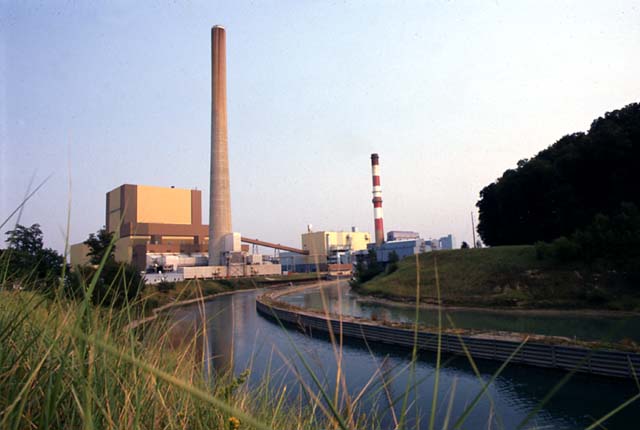
Coal electric generation from the Campbell is cheaper than gas, especially since the coal is sourced from the Powder River Basin, the plant is already built, $1 billion of anti-polluting equipment was spent on it in the last decade, and especially Unit 3 was intended to last to 2040. It makes absolutely no sense to be demolishing the Campbell anytime soon, especially given the huge electric demand in the USA. But that is precisely what Consumers Energy and its MPSC regulator want to do as soon as they can. Yet they are still full steam ahead with their unrealistic Net Zero agenda, which local consumers are required to pay for. Battery/solar/wind are simply not a viable replacement for fossil fuel plants for our baseload electric, and we should not be wasting local money on what hurts us.
Analyses of Consumers Energy financial statements shows how there is significant room to reduce customer electric pricing by what is recommended in our proposal. The fossil fuel to run electric generating plants is actually a rather small part of their cost. Most goes into maintenance and other operating expenses, capital expenditures (which are depreciated over time), and profits for investors. The two latter categories could be significantly reduced by our proposal. Instead of profits for investors, the electric cooperative would reduce electric pricing as the way to give money back to local users. Most capital expenditures could be reduced by keeping the Campbell open and generating electricity rather than spending to demolish it, and not spending much money on battery/solar/wind (but just the bare minimum to satisfy Michigan law while being safe).
I want to close by thanking all members of the Board for the way you have seriously approached this issue. If I may be of any assistance in your deliberations, please let me know.
Sincerely,
Joseph Parnell McCarter
Volunteer leader, “Save The Campbell” effort
Georgetown Township, MI